A stretch of road in our own backyard is claiming the lives of native animals at an alarming rate — and our volunteers are putting themselves at serious personal risk every time they respond.
As reported in the Sunbury & Macedon Ranges Star Weekly (24 February 2026), wildlife carers across the Macedon Ranges are calling for urgent changes to protect both animals and the people who come to their aid. At the centre of their concerns is the Woodend-Tylden Road, and in particular the bridge crossing the Campaspe River — a location so notorious among rescue volunteers that it has earned a grim nickname: the “valley of death.”
A Design That Traps Animals
MRWN’s Meaghan Willis explained to the Star Weekly exactly why this bridge is so deadly. The guardrails extend to ground level in some sections, creating a funnel effect that traps smaller animals — wombats, echidnas, and koalas — once they venture onto the structure. Unable to climb over the barriers, these animals are forced to travel considerable distances along the roadway to find an exit, all while vehicles travel at speed through an area of limited visibility.
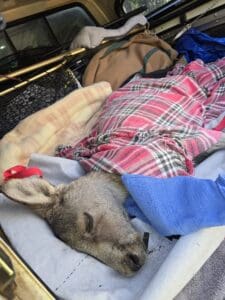
The numbers speak for themselves. On just one morning in February, four kangaroos were reportedly hit by cars at this location. As Meaghan Willis told the Star Weekly: “There’d be half a dozen animals struck there each week. Some of them get called into Wildlife Victoria, some of them don’t.”
Volunteers Left Dangerously Exposed
The problem isn’t only about the animals. Every time an MRWN volunteer pulls over to attend to an injured animal on this road, they are doing so without the legal protections afforded to other emergency services.
Road Rule 79a requires motorists to slow to 40km/h when passing emergency services vehicles — but this rule does not currently extend to wildlife rescuers. That means cars can legally fly past a volunteer crouching roadside trying to help an injured wombat or kangaroo.
“As volunteers, we’re not covered by that road rule, so we put ourselves in a really dangerous position because cars just fly by,” Ms Willis told the Star Weekly. While MRWN volunteers do display signage, they are not authorised to use flashing beacons as other emergency services are. The result, as Ms Willis put it plainly: “We’re putting ourselves in a great deal of danger.”
Council and Government Response
Macedon Ranges Shire Council’s director of assets and operations Dom Testoni acknowledged that while the Woodend-Tylden Road is managed by the Department of Transport and Planning, council will continue to advocate for wildlife safety. He noted that council is open to working constructively with the Victorian Government and community stakeholders to explore evidence-based measures to reduce wildlife roadstrike, particularly in known hotspot locations.
A spokesperson for the Department of Transport and Planning encouraged motorists to drive to safe speeds, noting that preventing collisions with animals is an ongoing challenge.
What Needs to Change
MRWN is calling for two practical, achievable changes: targeted infrastructure improvements at the Campaspe River bridge to prevent the funnel effect that traps animals, and an amendment to Road Rule 79a to extend slow-down protections to wildlife rescue volunteers.
These are not unreasonable asks. They are common-sense measures that would save animal lives and protect the dedicated volunteers who give their time — and risk their safety — to care for the wildlife of the Macedon Ranges.
If you’d like to support MRWN’s advocacy work, or help get these issues in front of decision-makers, get in touch with us or share this post to spread the word.
If you hit a wild animal, please call Wildlife Victoria on 13 000 94535.