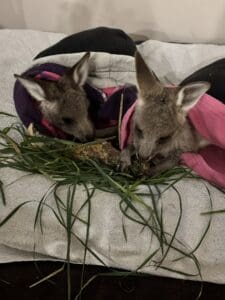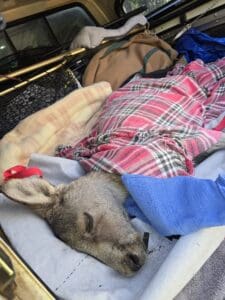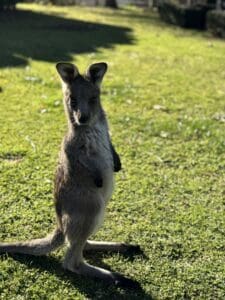
Helping native wildlife move safely through our landscapes
Why Does Friendly Fencing Matter?
In Victoria, our backyards and farms are part of important wildlife habitat. Many animals—kangaroos, wallabies, echidnas, wombats, gliders, and flying foxes—need to move across the land to feed, find water, shelter, and mates.
But fencing can:
- Trap, injure, or kill animals if it’s the wrong type
- Block safe passage, forcing animals onto roads
- Cause stress, panic, and even starvation if animals become stranded
Every fence is a decision point: will it help or harm wildlife trying to pass through?
How to Tell If Your Fence Is Wildlife-Friendly
Use this quick checklist:
- NO barbed wire, especially on the top strand
- Plain wires spaced to allow small animals to pass underneath (30–50 cm at the bottom)
- Good visibility (animals can see it and avoid running into it)
- Not too high (under 1.2–1.5 m if possible, unless needed for livestock)
- No mesh with small holes that can trap legs or heads (like ringlock or deer wire)
- Does not funnel animals toward roads or dead ends
If your fence ticks all these boxes—great! If not, don’t worry—there are easy fixes.
What You Can Do (Even On a Budget)
Existing Fences
Cheap and simple improvements:
- Replace the top strand of barbed wire with plain wire (or cover barbs with poly-pipe or old hose).
- Add white plastic tags, reflective tape, or strips of cloth to make fencing visible—especially for nocturnal animals.
- Cut a few small “wombat gates” (20 cm high x 30–40 cm wide) under the fence in safe spots.
- Leave logs or rocks at regular intervals to help smaller animals pass through or under.
- If mesh is used, cut a hole or two near ground level every 10–15 metres for escape paths.
For barbed wire fences:
- Wildlife Friendly Fencing recommends only barbed if needed (e.g. top strand for cattle); otherwise, replace or cover.
New Fences
Design with wildlife in mind:
- Use post-and-rail fencing or plain wire where possible.
- Avoid chain mesh, netting, or closely spaced wires unless essential.
- Use white droppers, tape, or tags from the start to increase visibility.
How Wildlife Are Affected
- Kangaroos and wallabies often get trapped when trying to jump over high or poorly visible fences.
- Flying foxes and gliders can tangle in barbed wire, especially on the top strand.
- Wombats and echidnas can get stuck under mesh or wire too close to the ground.
- Birds of prey may hit invisible fencing while hunting.
Each year, Wildlife Victoria responds to thousands of fencing-related injuries—many are preventable.
What to Do if You Find an Animal Caught in a Fence
- Do not try to free it yourself—this can cause more harm.
- Keep your distance and stay quiet to reduce stress.
- Call Wildlife Victoria immediately: 03 8400 7300 (or your local wildlife rescue group).
- If safe, provide shade and stay nearby until help arrives.
If it’s a regular issue:
- Talk to neighbours.
- Report dangerous fencing to DEECA (136 186) or your local council.
- Consider signage or improvements to alert others.
Want to Learn More or Take Action?
- Visit wildlifefriendlyfencing.org for great diagrams and solutions.
- Encourage neighbours and landholders to do a fence check walk together.
- Talk to your local wildlife group or Landcare about funding or support.
Every Small Change Helps
Even a few small changes—like removing barbed wire or adding visibility—can save lives. Wildlife needs safe ways to move across the land, and you can help make that happen.
Let your fence be a bridge—not a barrier.