Your Guide to Kangaroo Rescue and Care in the Macedon Ranges
The Macedon Ranges is a region rich in diverse native wildlife, and it is a privilege to share our landscape with iconic species such as kangaroos and wallabies.1 As our communities and the kangaroo population co-exist, encounters—especially on our roads—are an unfortunate reality. Knowing what to do in an emergency can make all the difference for an injured animal.
This guide provides crucial, step-by-step advice based on the expertise of local wildlife rescuers.
Step 1: Prioritize Your Safety and the Animal’s Well-being
If you encounter an injured kangaroo, your personal safety is the most important consideration.4 Pull your vehicle well off the road in a safe, visible location, and never approach the animal if it puts you in danger. A distressed animal, even an injured one, can be unpredictable. If it is safe to do so, move a deceased kangaroo at least 10 meters off the road to prevent further accidents.4
Step 2: Check for a Joey
After a roadstrike, a joey can survive for several days inside its mother’s pouch.4 If you can safely do so, check for a joey. If the kangaroo is a female, a lump or visible shape in the pouch may indicate a joey is inside.4
If you find a joey:
- Do Not Pull it Off the Teat: If the joey is still attached to its mother’s teat, do not try to pull it off. For furless joeys, you should carefully cut the teat at its base and leave it in the joey’s mouth. The joey will eventually release it on its own.4 Furred joeys can be gently eased off the teat.4
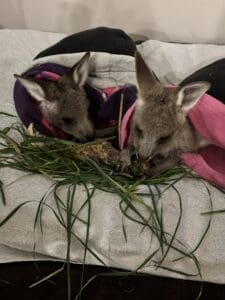
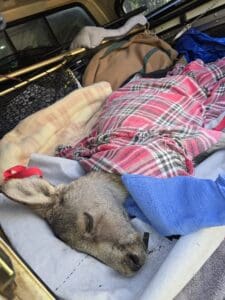
- Keep it Warm: The biggest threat to a rescued joey is cold.4 Gently wrap the joey in a soft item like a towel, blanket, or a t-shirt.4 The best way to provide warmth and comfort is to hold the joey close to your body so it can feel your heartbeat and warmth.5
- Maintain a Quiet Environment: Keep the joey in a quiet, dark, and warm place. If you are transporting it, do not play the radio and keep conversation to a minimum.6
Step 3: Do Not Feed or Give Water
Unless you are in an extremely remote location, you should not try to feed or give water to the joey.4 Giving food or water to a cold joey can be fatal.4 The animal’s immediate needs are warmth and a quiet environment.4 If the joey appears dehydrated, you can wet your finger with a little water and dribble it on its lips.4
Step 4: Contact a Professional
The most critical step is to call a professional. In Victoria, all sick, injured, or orphaned wildlife must be cared for by an authorized wildlife rehabilitator.7 The best course of action is to contact a licensed organization that can provide the necessary expert care.8
The primary 24/7 wildlife emergency service in the state is Wildlife Victoria, which operates a dedicated hotline.9 They handle over 160,000 calls for help annually and assist nearly 100,000 native animals.9
Wildlife Victoria 24/7 Emergency Response Service: (03) 8400 7300 8
Local Expertise and Community Efforts
The Macedon Ranges Wildlife Network is a grassroots, volunteer-run organization dedicated to the rescue, rehabilitation, and welfare of local wildlife.12 Our members include licensed carers who are part of the larger network of wildlife advocates in Victoria.12 We have run specialized training courses, such as the “Foundations of Macropod Rescue Training,” to ensure our volunteers have the essential knowledge and practical skills for safe rescue and handling techniques, pouch checks, and joey triage.12
Your actions can help save the life of a precious kangaroo. After handing the animal over to professionals, you can take pride in knowing you have done your part to help our native wildlife.4
To learn more about how you can support our local efforts, visit our website to explore our community education resources or learn how to volunteer.12 Together, we can create a safer future for the animals who call the Macedon Ranges home.12